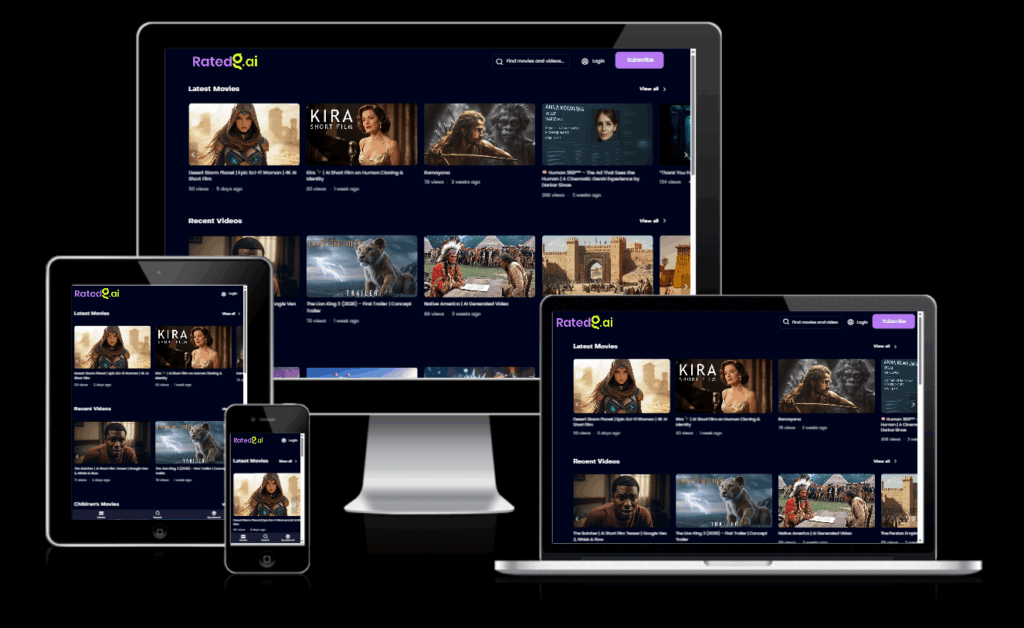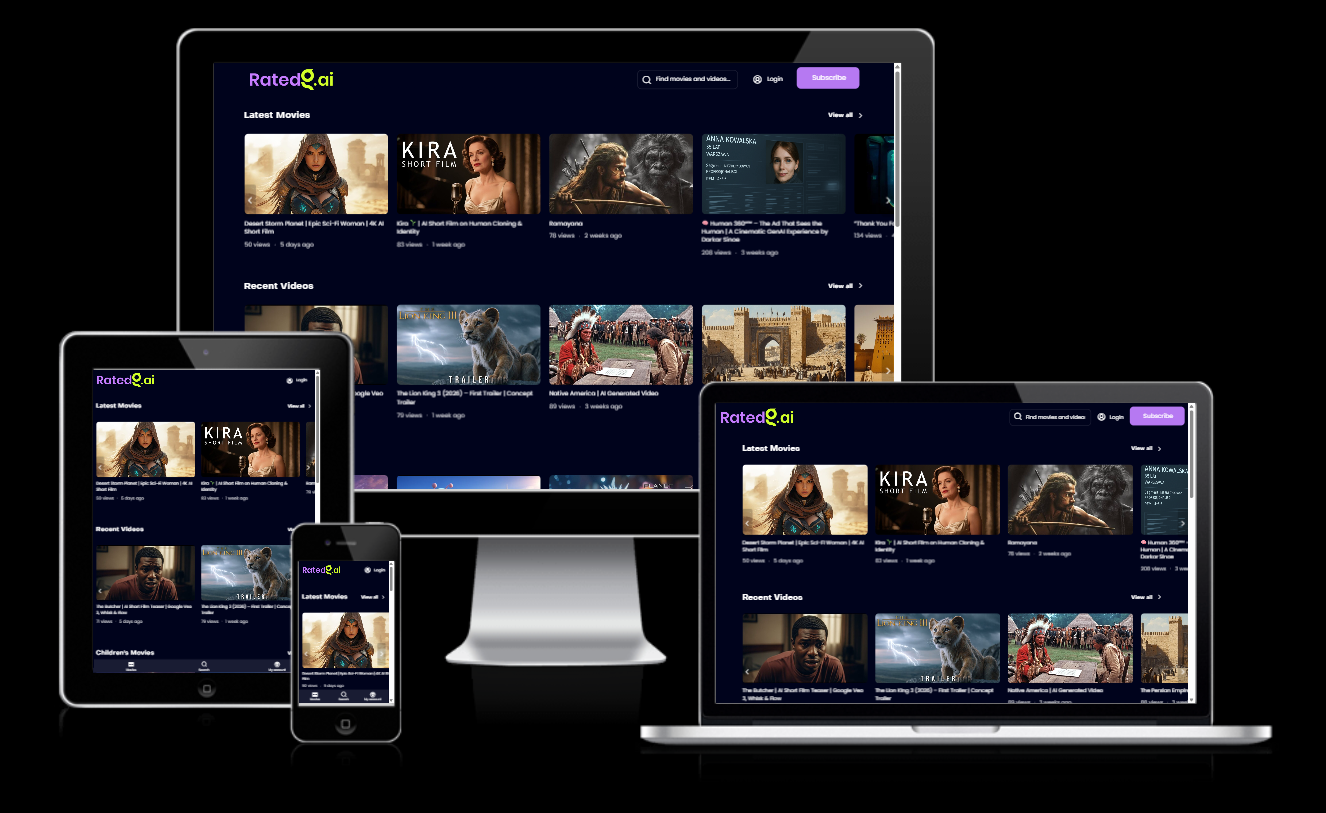

According to Sharad Agarwal, CEO of Cyber Gear, “At RatedG.ai, we believe that the future of AI-generated films is set to transform the entertainment industry in profound ways, reshaping how stories are created, produced, distributed, and consumed.”
Democratization of Filmmaking
Anyone can be a filmmaker: AI will reduce the barriers of cost, skill, and resources. Independent creators and small studios will be able to produce high-quality films without needing massive budgets.
Personalized films: Viewers may request customized stories, genres, or endings generated instantly by AI tools. Imagine choosing your favorite actor, location, and mood, and the film adapts in real time.
Hyper-Realistic Visuals and Performances
Digital actors: AI will create photorealistic characters indistinguishable from humans, potentially eliminating the need for physical actors in some productions.
Reviving legends: Past actors could be “resurrected” digitally with lifelike performances. Ethical and legal debates around likeness rights will become critical.
Synthetic locations: Expensive sets, exotic locations, or historical eras can be recreated digitally with stunning accuracy.
AI as a Creative Partner
Scriptwriting & storyboarding: AI can co-write screenplays, generate dialogue, and map out shot lists.
Idea generation: Directors can use AI to explore multiple narrative possibilities before deciding on a final version.
Adaptive storytelling: Films may evolve dynamically—branching narratives that change depending on viewer interaction.
Data-Driven Storytelling
Predictive success: AI will analyze audience preferences and box office data to predict which themes, genres, and character archetypes will resonate.
Audience segmentation: Studios may create multiple film versions targeting different demographics.
Faster, Cheaper Production
AI tools will drastically reduce post-production time for editing, CGI, dubbing, subtitling, and sound design.
Costs of filmmaking could drop by 70–90%, making experimentation more feasible.
New Distribution & Consumption Models
Streaming platforms: Netflix, Disney+, and others may offer AI-curated or AI-generated original content tailored for each user.
Interactive cinema: Viewers could “direct” their own experience, choosing plot twists.
The following issues need to be resolved.
Copyright disputes: Who owns an AI-generated film, the creator, the AI company, or the audience who provided prompts?
Actor rights: The use of an actor’s likeness without permission will require new laws and contracts.
Creativity vs. automation: AI films are art, or just simulations of creativity?
The future is exciting.
Entire production houses may rely on AI for writing, casting, filming, and editing.
Language barriers vanish with real-time dubbing and culturally adaptive versions.
Films won’t just be watched, they’ll be lived in immersive, AI-driven virtual worlds. We will go from storytelling to storyliving.
Visit RatedG.ai for more information.